October 8, 2026
Deep cleaning often feels like an exhausting, endless chore that swallows entire weekends or stretches across multiple days. Most homeowners approach deep cleaning reactively—tackling one messy corner, getting distracted by clutter, or endlessly scrubbing stubborn grime—which inevitably leads to fatigue and incomplete results. According to the American Cleaning Institute (ACI), nearly half of Americans (45%) report that spring cleaning takes three or more days, with 23% spending three to four days and 22% needing five days or more. However, hiring a professional cleaning company turns this daunting multi-day effort into a swift, systematic process executed in a fraction of the time. By replacing trial-and-error methods with structured workflows, commercial-grade equipment, and specialized techniques, professionals prove that deep cleaning doesn't have to consume your life.
Organizing Systems Before Starting
Before wiping a single surface or turning on a vacuum, professional cleaners invest time in comprehensive prep work. Attempting to clean amidst chaotic clutter or constantly running back and forth across the house for forgotten supplies drains valuable time and energy. Professionals begin with a rapid walk-through of the home to evaluate priorities, assess heavily soiled zones, and plan the most efficient route.
Next, they stage all necessary cleaning supplies in a central, accessible location. Rather than carrying individual spray bottles from room to room, technicians carry wearable caddies stocked with all essential products and fresh microfiber cloths. Heavy machinery—such as vacuums and steam cleaners—is placed strategically in central hallways so it is readily available when needed.
Finally, pre-cleaning preparation involves establishing a clear top-to-bottom spatial hierarchy. Blinds are dusted, light fixtures are wiped, and ceiling fans are cleared first so that any falling debris lands on surfaces that haven't been touched yet. By organizing every tool, product, and room sequence before work begins, technicians eliminate wasted steps and maintain uninterrupted momentum throughout the day.
Standardizing Workflows Across Rooms
Chaos breeds inefficiency, which is why professional teams never clean at random. Instead, they rely on standardized, repeatable movement patterns that ensure complete room coverage without repeating steps. The most foundational strategy is the clockwise (or counterclockwise) traversal method: technicians enter a room and work systematically along the perimeter in one direction until they reach their starting point.
To further streamline the process, properties are divided into distinct cleaning zones. Instead of bouncing between a bedroom and a bathroom, a technician completes an entire zone before moving forward. Within each zone, a strict task order is followed—dusting high surfaces, cleaning vertical furniture and walls, sanitizing horizontal countertops, and finishing with the floors.
This structured workflow eliminates the urge to second-guess what needs to be done next. When every team member adheres to the same standardized sequence, a cleaning company can systematically cover thousands of square feet without missing details or wasting energy on redundant motions.
Deploying Commercial Grade Tools
Residential cleaning appliances are often underpowered, requiring multiple passes to achieve satisfactory results. Professional teams bypass this limitation by investing in high-performance commercial equipment engineered for maximum power and speed.
Commercial vacuums equipped with high-CFM motors and multi-stage HEPA filtration suck up embedded dust, dander, and grit in a single pass. Unlike standard upright vacuums, high-suction backpack models allow technicians to move freely around furniture, up staircases, and into tight corners at twice the speed of a homeowner pushing a traditional unit.
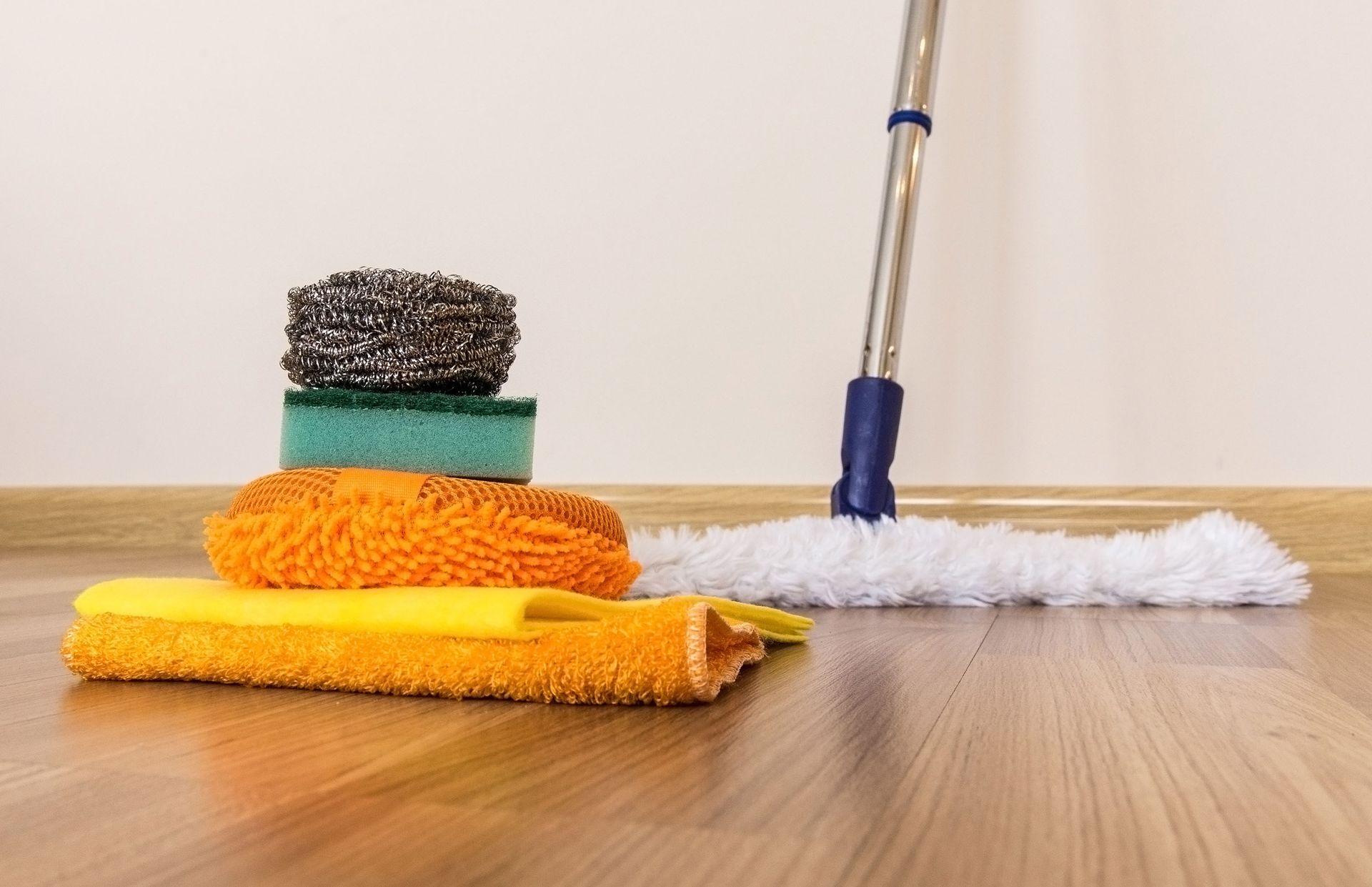
Beyond vacuums, professionals use color-coded microfiber cloth systems to maintain speed while guaranteeing hygienic safety. Specific colors are assigned exclusively to bathrooms, kitchens, and general dusting areas. This prevents cross-contamination and removes the need for technicians to stop and check whether a rag has been contaminated. Additionally, portable steam cleaners are used to blast stubborn grout grime, soap scum, and greasy kitchen vents, using heat and high pressure to dissolve contaminants in seconds without manual labor.
Leveraging Multitasking Chemical Solutions
A major reason DIY deep cleaning takes days is the excessive time spent scrubbing stubborn buildup. Cleaning professionals minimize physical effort by letting specialized, high-grade chemical formulas do the heavy lifting through chemical dwell times.
Dwell time refers to the period a cleaning product must sit on a surface to fully break down grease, soap scum, or mineral deposits. Upon entering a bathroom or kitchen, technicians immediately spray shower walls, toilets, sinks, and stovetops with targeted solutions. While the chemicals work to dissolve the grime, the cleaners move on to dry-dusting, mirror polishing, or cabinet wiping in adjacent areas. When they return to the treated surfaces, the dirt wipes away easily without intense scrubbing.
Furthermore, professionals rely on multi-surface, professional-grade concentrates rather than juggling dozens of niche retail sprays. Using precise automatic dilution systems, a cleaning company ensures products are mixed to their optimal strength, maximizing chemical effectiveness and avoiding time-wasting streak residue caused by improper product ratios.
Dividing Tasks Among Specialist Teams
While a homeowner typically tackles deep cleaning as a solo endeavor, professional services scale up efficiency through teamwork and task division. Deploying coordinated teams drastically reduces job duration while elevating overall quality.
In a multi-person crew, responsibilities are split based on specialization and flow. One technician might focus on high dusting and cabinet restoration, another handles wet sanitation in bathrooms and kitchens, while a third manages floor care across the home. Working in parallel prevents bottlenecks and keeps everyone focused on specific, efficient movements.
This division of labor also enables continuous quality control. As specialists complete their designated tasks, the team lead conducts real-time inspections in completed rooms. Any minor spots or overlooked areas are touched up immediately before the floor team executes the final pass, eliminating the need to backtrack through the house at the end of the appointment.
Automating Repetitive Manual Scrubbing
Manual scrubbing is slow, exhausting, and often inefficient against set-in stains. Professional teams overcome this barrier by replacing manual effort with powered machinery and specialized mechanical tools.
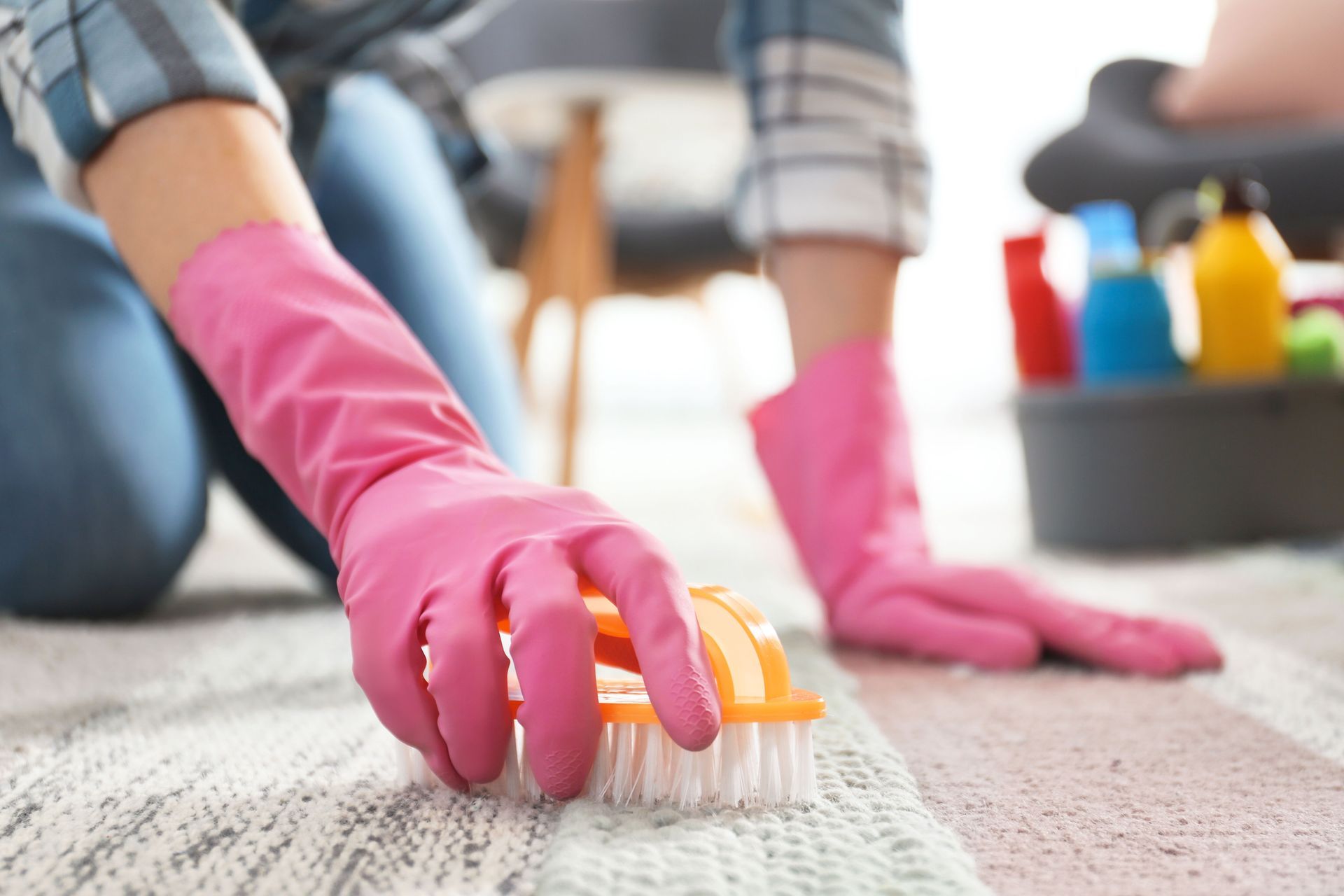
For heavily tiled showers, textured flooring, and stained outdoor entryways, cleaners use high-torque power scrubbing attachments fitted to cordless drills or specialized rotating brush tools. These motorized heads rotate hundreds of times per minute, stripping away hard water spots, mold, and soap scum in seconds—a task that would take hours of painful hand scrubbing.
Glass and reflective surfaces are also treated with specialized mechanical tools. Instead of wiping windows, glass partitions, and large mirrors with paper towels and liquid spray—a method prone to leaving streaks and lint—technicians employ professional brass squeegees and precision strip washers. With fluid, overlapping strokes, large glass panels are restored to crystal clarity in a single motion, saving immense amounts of time during a whole-home deep clean.
Eliminating Common Time Wastes
Professional efficiency isn't just about moving fast; it's about eliminating micro-delays that add up to hours of wasted time. Small interruptions—such as hunting for a fresh trash bag, untangling power cords, or walking back across the home to fetch a forgotten tool—radically slow down the deep cleaning process.
To maintain continuous momentum, technicians practice strict equipment management. Cordless tools are preferred whenever possible, and corded equipment is routed with long extension cables to prevent frequent outlet switching. Wearable aprons and tool belts keep scraper blades, detail brushes, trash bags, and microfiber rags directly on the technician's person.
In addition, professionals adhere to the rule of single-pass cleaning. Because tasks are completed in a strict top-to-bottom, back-to-front order, surfaces are touched once and only once. By preventing re-contamination of freshly cleaned areas, an efficient cleaning company maintains a seamless forward pace from the moment they step into a property until the final exit.
Deep cleaning a home does not have to be a multi-day ordeal that consumes your valuable free time. By organizing systems before starting, standardizing clockwise workflows, deploying commercial tools, leveraging chemical dwell times, and eliminating small time-wastes, professional cleaning methods turn complex chores into an efficient science. Working smarter with structured techniques delivers superior results in a fraction of the time. When you choose to partner with a professional
cleaning company, you gain access to these high-speed systems, keeping your living space healthy and immaculate without sacrificing your weekends.
Are you ready to reclaim your weekend and enjoy a spotless, refreshed home without lifting a finger? Let the experienced team at CL Cleaning Group LLC handle your heavy lifting using our proven, high-speed deep cleaning systems. Contact us today to schedule your deep cleaning service and experience the difference professional detail can make!